
AI in actuarial work: what the data and the rules say
How actuaries are using AI today, which standards and regulations already apply, and the skills employers are hiring for.
In short
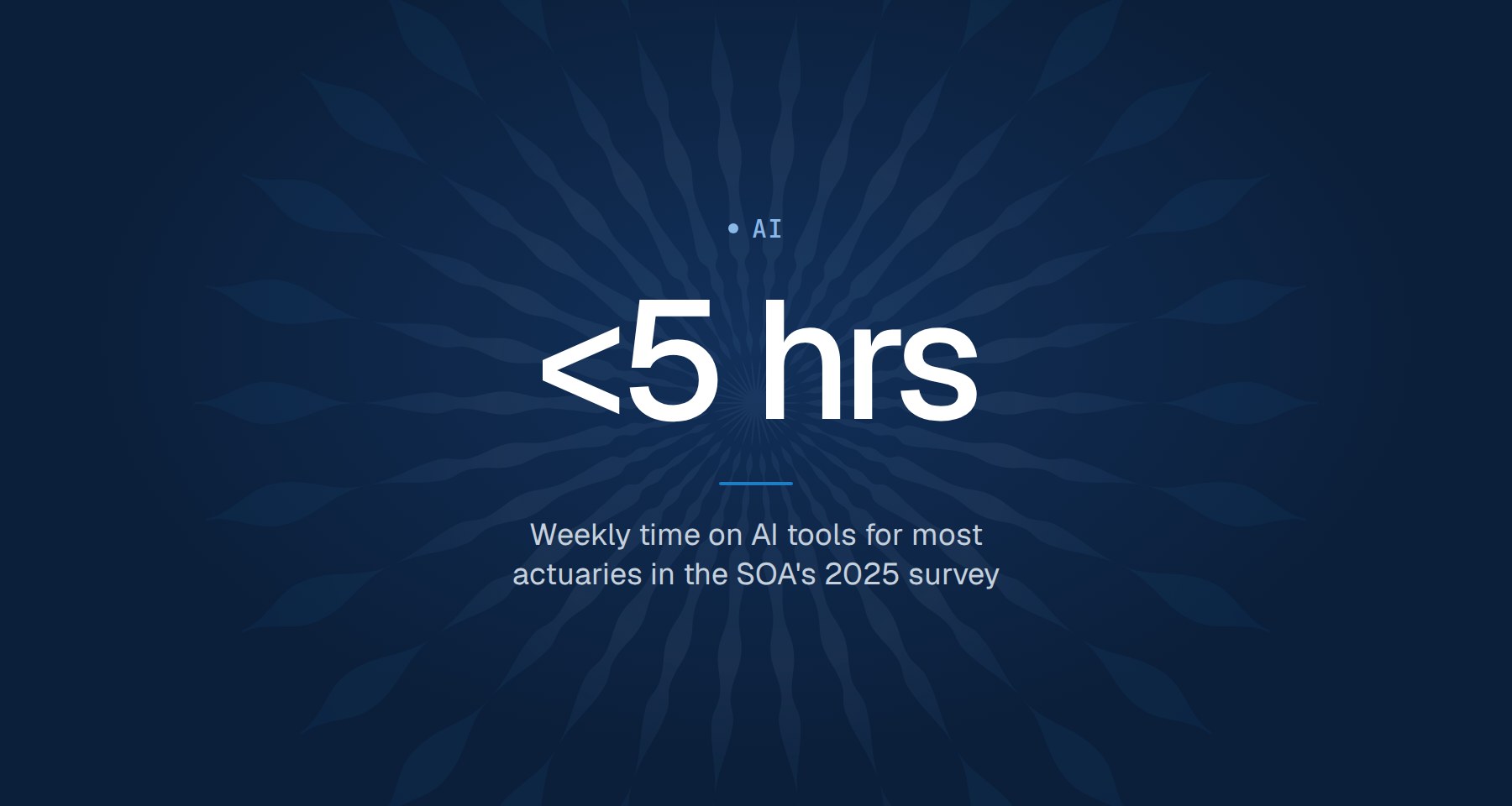
- Actuaries in the SOA's 2025 member survey use AI, but not much. Most spent under 5 hours a week on AI tools, and 18% to 27% did not use them at all, depending on experience.
- Less experienced actuaries use AI for code far more than experienced ones: 48% against 29% of users, though the less experienced group was small.
- In the US, the professional standards already apply. The American Academy of Actuaries' president has said "AI is a model, and as such, ASOP No. 56 applies."
- Regulation is catching up. At least 24 US states and DC have adopted the NAIC's AI bulletin, Colorado requires AI governance from life insurers, and since October 2025 from auto and health insurers too, and Canada's OSFI brings AI models under its model risk guideline from May 2027.
- For careers, the actuaries in demand are those who can build with these tools, check the output and explain the result.
Opinions on AI in actuarial work range from a shrinking profession to more work than ever. Neither view helps much if you are deciding what to learn next year or whom to hire. This piece sticks to what the data and the rules actually say.
How actuaries are using AI today
The best current data comes from the SOA's Member AI Survey, run in summer 2025 with 518 respondents, most of them in North America. The results are split by experience:
- Time spent. Most respondents spend under 5 hours a week on AI or machine learning tools: 57% of those with up to 10 years' experience and 63% of those with more. About 27% of the less experienced group and 18% of the more experienced group don't use them at all.
- Top uses. Learning and brainstorming, writing or interpreting documents, and chatbots. Code generation is where the groups differ most: 48% of less experienced users use AI for code, against 29% of more experienced users. Most respondents had more than 10 years' experience, so the less experienced group is small and the gap is a direction rather than a precise figure.
- Benefits and barriers. Time saving is the top benefit, cited by 87% and 80% of the two groups. Regulatory and compliance risk is the top barrier, cited by 58% and 53%.
- Support. Fewer than 30% report formal training from their employer, and about a third report no formal support at all.
So use is widespread but light, and much of it is self-taught. The SOA's own reading is similar: awareness is widespread, but practical integration into actuarial work remains limited.
The standards already apply
There is no separate rulebook for AI in actuarial work, and there doesn't need to be. ASOP No. 56 on modelling has applied since October 2020. In 2026 the Academy's president, Tricia Matson, put it plainly: "AI is a model, and as such, ASOP No. 56 applies."
The Academy's 2024 discussion paper on generative AI makes the same point from another angle: "actuaries unqualified to perform an actuarial service without AI are likely not qualified to perform it with AI." AI does not lower the bar. You still need to understand the work well enough to know when the output is wrong.
Regulators are moving
- NAIC model bulletin. Adopted in December 2023, it sets expectations for how insurers govern AI systems. At least 24 states plus DC had adopted it as of 1 April 2026. California, Colorado, New York and Texas have their own guidance.
- Colorado. Life insurers using external consumer data and algorithms must have board oversight, a cross-functional governance committee, an inventory of data, algorithms and models, testing for unfair discrimination and oversight of vendors. Full compliance was due by 1 December 2024, with annual reports every December. In October 2025 the rules were extended to auto and health insurers.
- Canada. OSFI's Guideline E-23 on model risk management takes effect on 1 May 2027 for all federally regulated financial institutions, including life insurers. It explicitly covers AI and machine learning models.
Regulators expect insurers to know which models they use, how they were built and how they are tested, and that is work actuaries are trained to do.
What employers are hiring for
Job adverts still ask for the core data toolkit first. O*NET, the US Department of Labor's occupation database, flags Python, R, SQL, SAS, VBA, Power BI, Tableau and Excel as "in demand" technologies for actuaries, meaning they appear frequently in employer job adverts for the role. Beyond the tools, three skill sets stand out:
- Building with code. Actuaries who can write and review Python or R, and use AI to speed that up, get through modelling and data work faster. The SOA survey suggests less experienced actuaries are already doing this.
- Model governance and validation. The changes in our 2026 regulation piece, from VM-22 to AG 55, put more weight on model documentation and validation, and OSFI's E-23 explicitly brings AI and machine learning models into model risk management. People who can check a model they did not build are valuable.
- Explaining the result. As AI speeds up production, the bottleneck moves to review and communication. The actuary who can tell a CFO or a regulator why a number moved is harder to replace than the one who produced it.
What this means for you
- If you are early in your career, keep using AI for code and learning, but make sure you can do the work without it. The exams and the standards assume you can.
- If you are experienced, the survey suggests you are less likely to use AI for code. Closing that gap is one of the cheaper ways to stay sharp.
- If you lead a team, formal AI training is still the exception: fewer than 30% of respondents in the SOA survey said their employer offers it. Providing training and clear rules on use is a practical way to attract and keep good people.
- In interviews, expect questions about how you check your own work and how you would validate a model. Concrete examples of catching an error land better than a list of tools.
If you want to talk about how these skills are valued in the market, or you are hiring for a modelling or governance role, get in touch.
Sources
- Society of Actuaries, Member AI Survey, Summer 2025 (report October 2025).
- Actuarial Standards Board, ASOP No. 56, Modeling; American Academy of Actuaries, Actuarial & Algorithmic Accountability: Setting Ethical Standards for AI, March 2026; Academy, Actuarial Professionalism Considerations for Generative AI, 2024.
- NAIC, AI Model Bulletin adoption map, status as of 1 April 2026; NAIC, Artificial Intelligence.
- Mayer Brown, Colorado adopts AI regulation for life insurers, September 2023; Willkie Farr, Colorado amended AI governance regulation, September 2025.
- OSFI, Guideline E-23 Model Risk Management, September 2025.
- O*NET OnLine, Actuaries (15-2011.00), accessed September 2026.
About the author

Sho Temma is an Associate in Candidate Relations at Concordia Talent Solutions, a specialist actuarial and insurance recruitment firm. He works with actuaries across the US, Canada, Bermuda and Asia on their careers and next moves, and writes CTS Insights on actuarial pay, hiring and regulation.
More insights
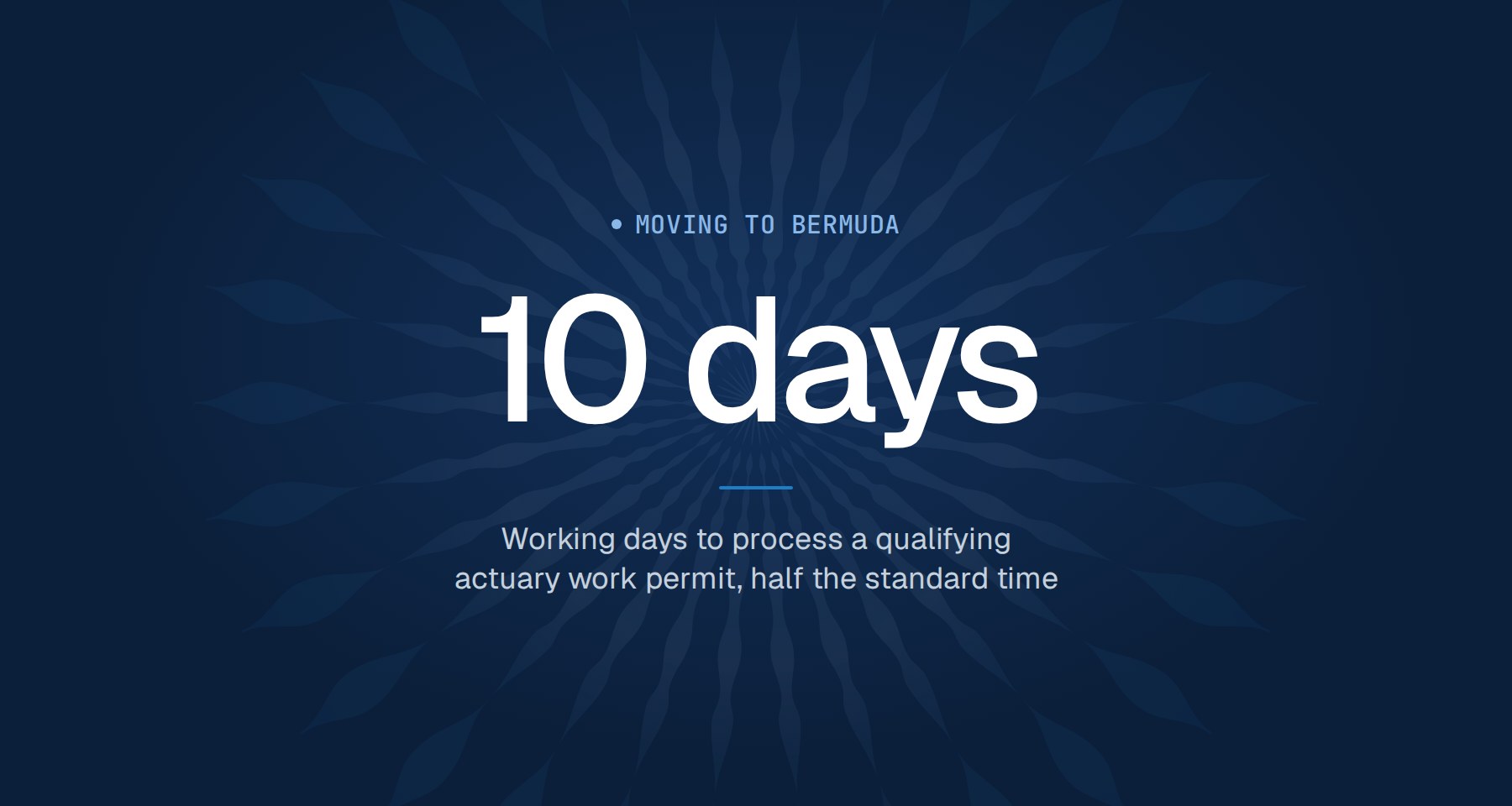
What a move to Bermuda involves for actuaries: the work permit fast track, payroll tax and deductions, rents and schools, and your US or Canadian tax.
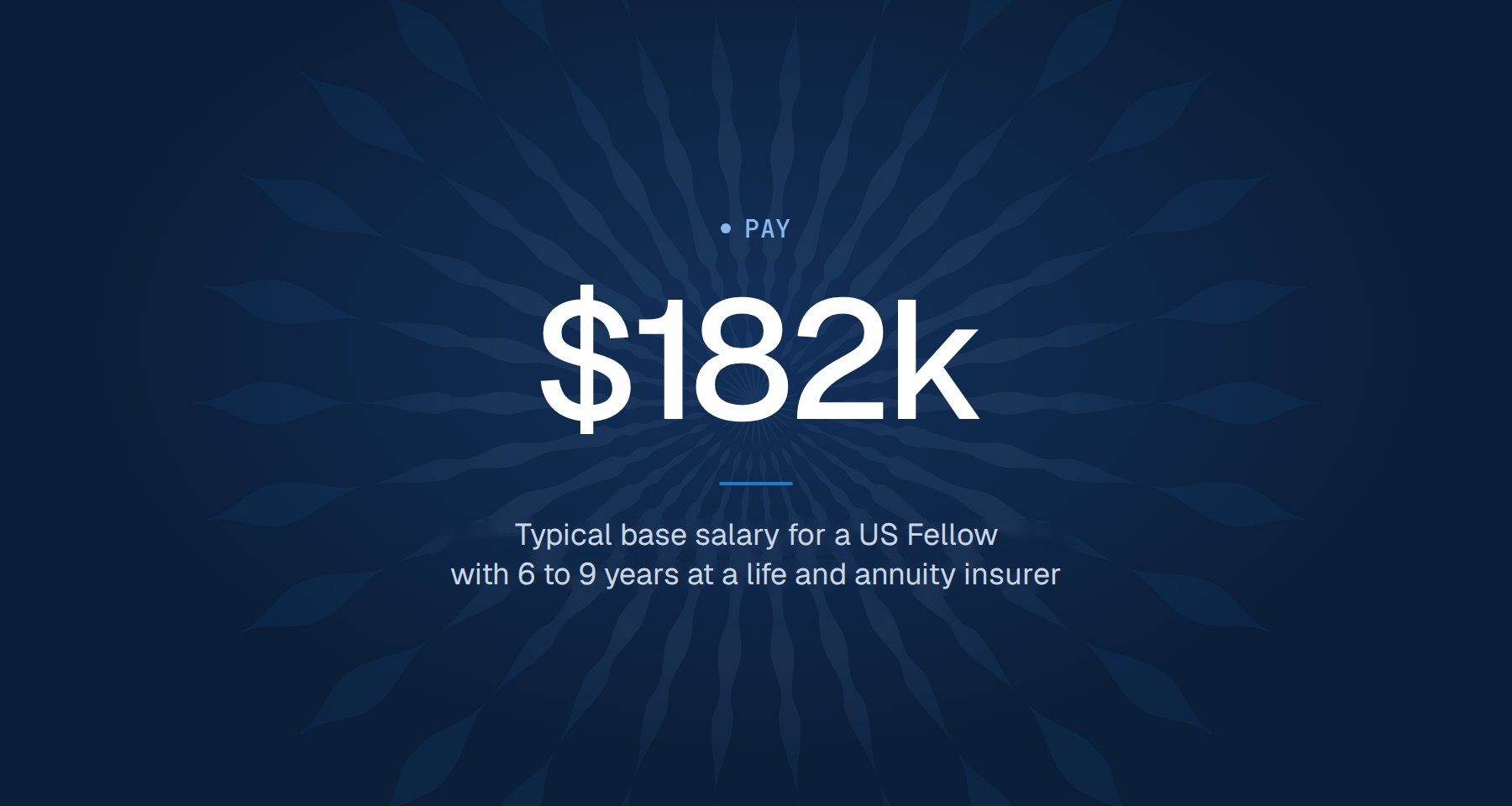
Typical base pay for US actuaries by credential, experience, sector and city, plus bonus targets and pay in Canada and Bermuda, from the CTS Pay Index.
Titles mean different things at insurers, reinsurers, consultancies and Big 4 firms. How the levels line up and what each pays in the US, Canada and Bermuda.

What actuaries ask for to move, how counteroffers tend to play out, where non-competes still apply, and the paperwork for moving to the US or Bermuda.
Let's talk about the role you can't fill
Whether you are hiring an actuary or quietly weighing up your next move, the first conversation is confidential and costs nothing.