
Actuary salaries in 2026: what the data says
Typical base pay for US actuaries by credential, experience, sector and city, plus bonus targets and pay in Canada and Bermuda, from the CTS Pay Index.
In short
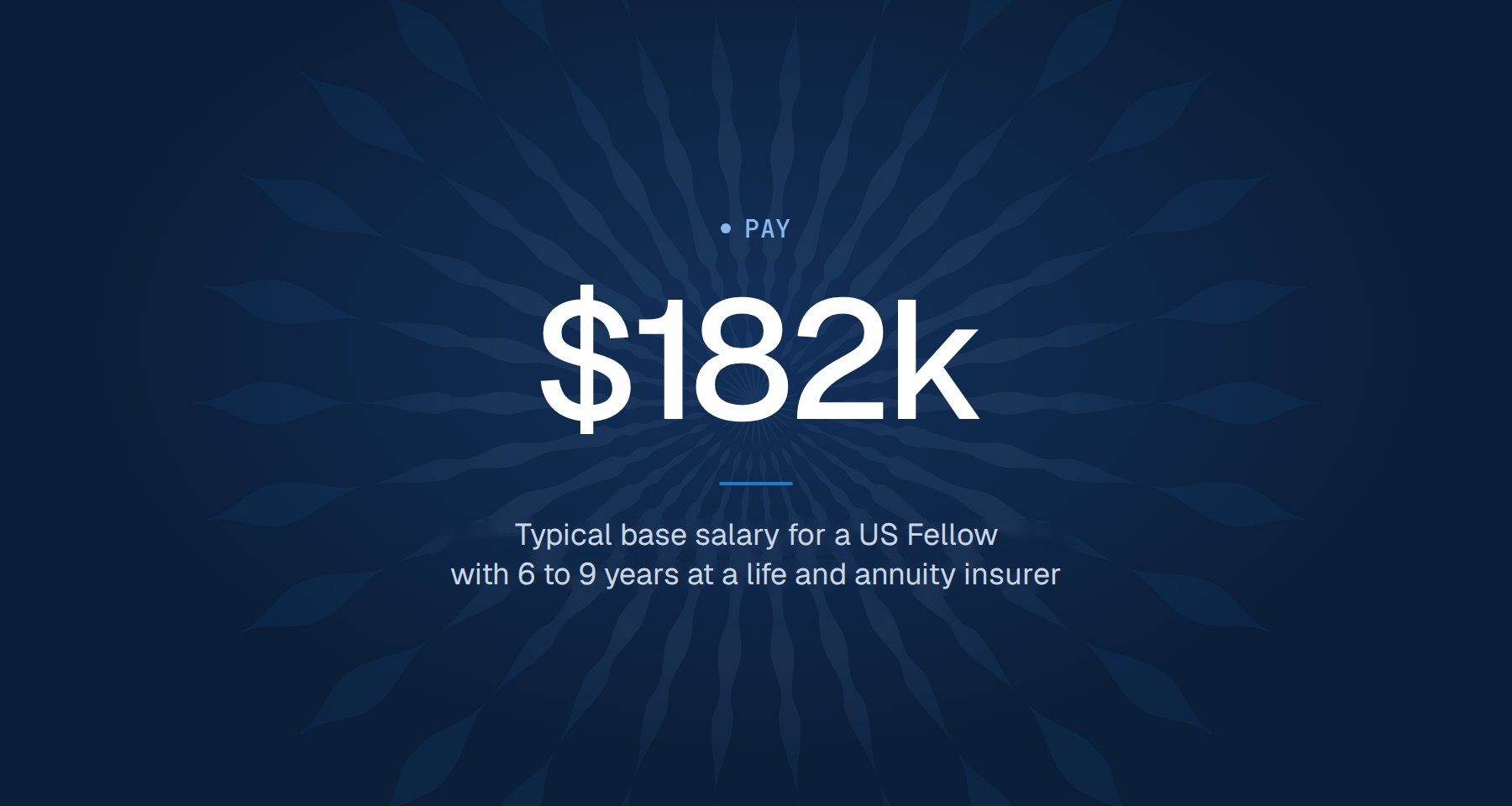
- Our Pay Index puts typical base salary for a US Fellow with 6 to 9 years at a life and annuity insurer at about $182,000, and about $149,000 for an Associate with the same experience.
- Roles for Fellows pay about 16% more base than roles for Associates at 3 to 5 years, and the gap widens to about 22% at 6 to 9 years, 25% at 10 to 14 and 28% at 15 or more.
- Sector moves base pay less than credential or experience. Reinsurers pay about 7% more than life and annuity insurers for the same credential and experience, and the other sectors sit in between.
- Employers' pay ranges by location put the expensive metros up to about 10% above the national figure, and most other markets about 4% below it.
- Bonus targets in the offers we see run about 15 to 20% of base for a Fellow with 6 to 9 years and rise with seniority, so compare total pay, not base against base.
The actuaries we speak with ask the same question in different words: am I paid properly? Usually they're comparing themselves with a friend at another company, a number they found online, or the pay range on a single job advert. On its own, none of those is a fair benchmark.
That is why we built the CTS Actuarial Pay Index: our view of what actuarial roles pay, built from the offers, counteroffers and pay conversations in our own search work, the pay ranges in the actuarial roles advertised over the last 12 months, and government wage data. The salary figures are base pay: what employers pay the people they hire, before any bonus. This article pulls out what the index says about actuarial pay in 2026.
The government baseline
The US Bureau of Labor Statistics gives the broadest view. In May 2025 the median annual wage for actuaries was $130,000, and the mean was $141,480. BLS counts 31,200 actuary jobs, projects 9% growth between 2025 and 2035 and expects about 1,500 openings a year on average.
That median is useful context but a poor benchmark for any one person. It mixes new graduates with Chief Actuaries, every practice area and every city. The Pay Index breaks pay down by the things that actually move it: credential, years of experience, sector and location.
Credentials: the Fellowship is still the biggest pay event
Here is the typical base salary at US life and annuity insurers, the core of our market:

- Students (not yet Associate): about $99,000 for those hired with up to two years' experience and $112,000 at 3 to 5 years. For those still on the exam track later, about $125,000 at 6 to 9 years and $134,000 at 10 to 14.
- Associates (ASA): about $125,000 at 3 to 5 years, $149,000 at 6 to 9, $166,000 at 10 to 14 and $185,000 at 15 or more.
- Fellows (FSA): about $145,000 at 3 to 5 years, $182,000 at 6 to 9, $208,000 at 10 to 14 and $237,000 at 15 or more.
Roles for Fellows pay about 16% more base than roles for Associates at 3 to 5 years, widening to about 22% at 6 to 9 years, 25% at 10 to 14 and 28% at 15 or more. The premium grows with seniority rather than fading.
For students, if you are weighing a move against finishing your exams, the exams usually win on money alone. If a new employer offers stronger exam support, it can be worth more than the headline salary.
Bonus and total pay
Base salary is only part of an offer. The bonus figures in the Pay Index come from the offers we see in our own search work. Typical target bonus as a share of base at US life and annuity insurers:
- Students: about 3 to 6% in the first two years, 5 to 8% at 3 to 5 years and 5 to 10% after that.
- Associates: about 8 to 12% at 3 to 5 years, 10 to 15% at 6 to 9, 12 to 18% at 10 to 14 and 15 to 20% at 15 or more.
- Fellows: about 10 to 15% at 3 to 5 years, 15 to 20% at 6 to 9, 20 to 25% at 10 to 14 and 25 to 35% at 15 or more.
Reinsurers usually target a few points more and health insurers a little less. Consulting firms target less: about 8 to 15% for a Fellow with 6 to 9 years. Bermuda insurers and reinsurers target up to five points more than in the US. Targets are not payouts: actual bonuses move with company and individual performance, and senior roles often add long-term incentives on top. So when you compare offers, compare total pay. Base can hide a large difference.
The Pay Index describes what employers pay to hire, not what their current staff earn. Someone who has been in a role for several years can sit above or below the range for the same job today.
Sector: a narrower spread than you might think
For a US Fellow with 6 to 9 years, typical base salary by sector is:
- Reinsurers: about $194,000
- Consulting firms: about $188,000
- Health: about $187,000
- Property and casualty (FCAS): about $183,000
- Life and annuity insurers: about $182,000
The spread is narrow: about 7% from top to bottom, with reinsurers paying the most for the same credential and experience. The job-title view tells a slightly different story at mid-level, where health insurers pay less than life insurers; our job titles guide covers that view. In our experience the bigger differences come from the role itself, for example deal pricing or asset-intensive work, and from bonus structures.
Location: a 10% question, not a 30% one
Employers that hire actuaries in several US locations set different pay ranges for the same role depending on where it is based. Like for like:
- The higher-cost metros (New York City, San Francisco Bay Area, Boston, Hartford and Connecticut, New Jersey, Washington DC, Southern California and Seattle) pay about 10% above the national figure.
- Chicago pays about 2% above.
- Most other markets, including Des Moines, Minneapolis, Atlanta, Charlotte and Columbus, pay about 4% below.
Government data is less tidy, because it mixes every level and practice area. BLS medians for all actuaries in May 2025 were $161,460 in the New York metro and $166,800 in Hartford, well above the national $130,000, but $130,540 in Des Moines and $113,730 in Chicago. The New York metro alone employs about 2,780 actuaries.
With hybrid and remote roles now common, many employers set pay by where you live rather than where the office is. It is worth asking which zone you would sit in before you negotiate.
Canada and Bermuda
In Canada, life insurers hiring a Fellow with 6 to 9 years pay a typical base of about C$160,000, rising to about C$194,000 at 10 to 14 years. Canadian employers mostly set one national pay range, so Toronto, Montreal and Waterloo pay much the same for the same role.
Bermuda employers rarely publish pay, so we set Bermuda pay from the offers we see in our own Bermuda searches. Base runs a little above the US, and the bigger difference is the package. For a Fellow with 6 to 9 years we put typical base at about $190,000 at a life and annuity insurer and $200,000 at a reinsurer, against $182,000 and $194,000 in the US. Bonus targets run higher and vary more: about 15 to 25% of base at Bermuda insurers and 18 to 28% at reinsurers, against 15 to 20% and 18 to 23% in the US. Insurers and reinsurers on the island also pay a housing allowance, typically about $2,000 to $6,000 a month, which US employers do not offer as standard. All-in, that puts a Bermuda life and annuity package at about $242,000 to $310,000 a year and a reinsurer package at about $260,000 to $328,000, against about $209,000 to $218,000 base plus bonus at a US life and annuity insurer, before income tax. Consulting firms on the island, including the Big 4, pay well below that: about $135,000 base for the same Fellow, a smaller bonus and usually no housing allowance. There is no personal income tax, but employees pay payroll tax on a sliding scale, about $13,900 a year on a $190,000 base in 2026/27 (some employers cover it), and US citizens remain liable to US tax. For a wider view, the Government's 2024 Employment Survey puts the median gross annual income of full-time non-Bermudian actuaries on the island at $226,796 across all levels and employers (301 jobs), and $166,395 for Bermudian actuaries (53 jobs). We cover the island in more detail in our Bermuda market piece.
How pay moved over the last year
The latest government data shows steady rather than dramatic growth. The BLS median wage for all actuaries rose 3.4% between May 2024 and May 2025, although BLS cautions that its wage survey is not designed for year-on-year comparisons. Bermuda's survey records income in wide bands, so its medians barely move from year to year (non-Bermudian actuaries: $226,348 in 2023 and $226,796 in 2024) and are better read as a level than a trend.
So market pay is rising by a few per cent a year, while the actuaries we speak with typically ask for about 11% more to move. We look at what it takes in our piece on changing jobs.
Check your own number
The Pay Index lets you set your market, city, credential, experience and sector, or look up a specific job title by employer type. Add your own salary and you unlock where you sit in the range and what it would take to move.
If you would rather talk it through, email us. The conversation is confidential and costs nothing.
Sources and method
- CTS Actuarial Pay Index, October 2026: our view of what actuarial roles pay, built from the offers, counteroffers and pay conversations in our own search work, the pay ranges in 675 US and 121 Canadian actuarial roles advertised over the last 12 months, and government wage data, with every figure reviewed by our team. Base salaries are grouped by credential, experience and type of employer. Bonus targets come from the offers we see. Location factors come from the pay ranges employers set for the same role in different locations. The "what it takes to move" figure comes from our own candidate conversations. No individual salaries are ever published.
- US Bureau of Labor Statistics, Occupational Outlook Handbook: Actuaries (median wage May 2025; employment 2025; projections 2025 to 2035).
- BLS, Occupational Employment and Wage Statistics, May 2025 (mean wage).
- BLS, Occupational Employment and Wages, May 2025: Actuaries (15-2011), metropolitan area figures.
- Government of Bermuda, 2024 Employment Survey, detailed tabulations (Tables 25 and 26, median gross income of Bermudian and non-Bermudian actuaries), and the 2023 survey for the year-on-year change.
About the author

Sho Temma is an Associate in Candidate Relations at Concordia Talent Solutions, a specialist actuarial and insurance recruitment firm. He works with actuaries across the US, Canada, Bermuda and Asia on their careers and next moves, and writes CTS Insights on actuarial pay, hiring and regulation.
More insights
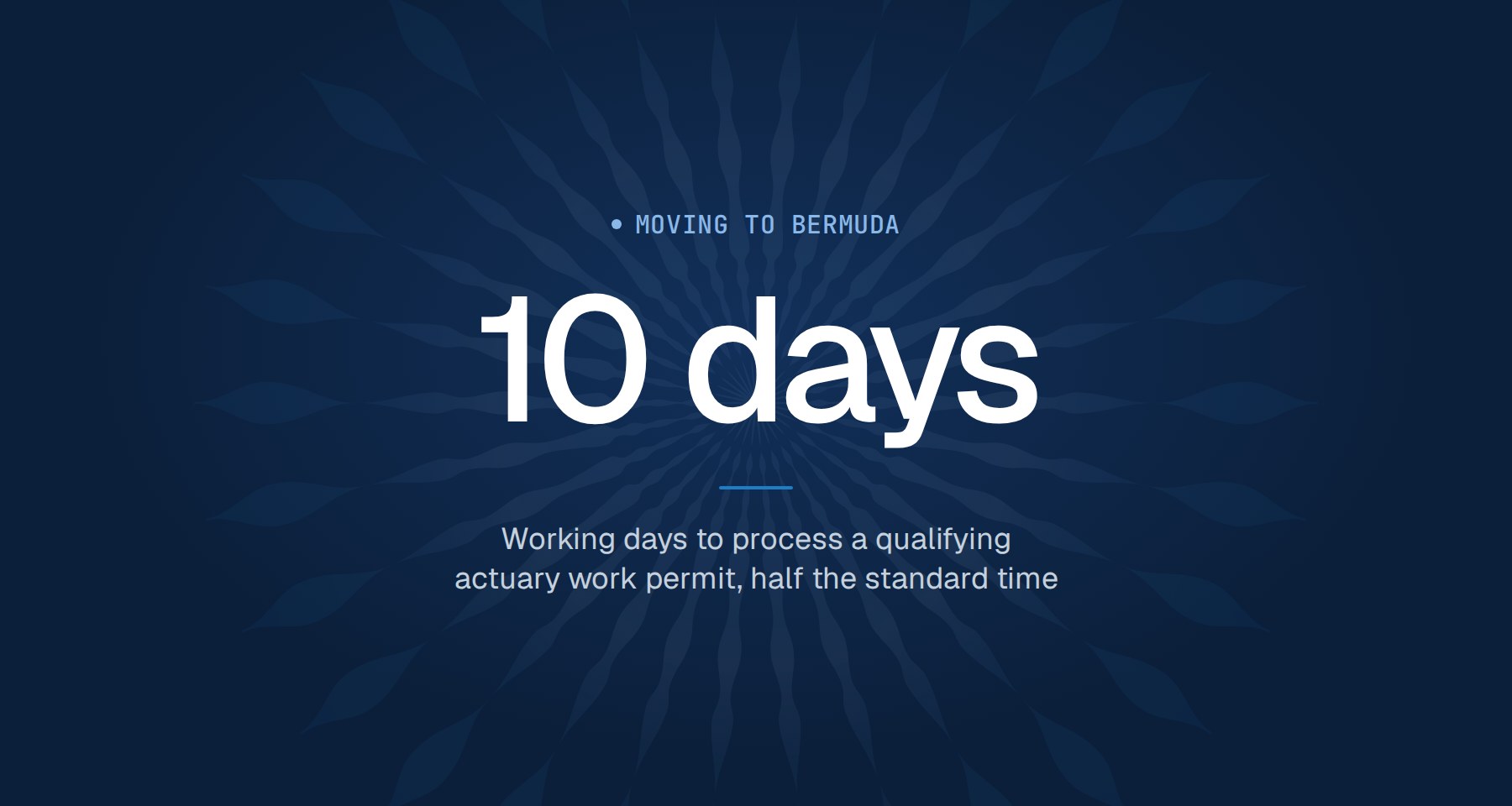
What a move to Bermuda involves for actuaries: the work permit fast track, payroll tax and deductions, rents and schools, and your US or Canadian tax.

Titles mean different things at insurers, reinsurers, consultancies and Big 4 firms. How the levels line up and what each pays in the US, Canada and Bermuda.

What actuaries ask for to move, how counteroffers tend to play out, where non-competes still apply, and the paperwork for moving to the US or Bermuda.
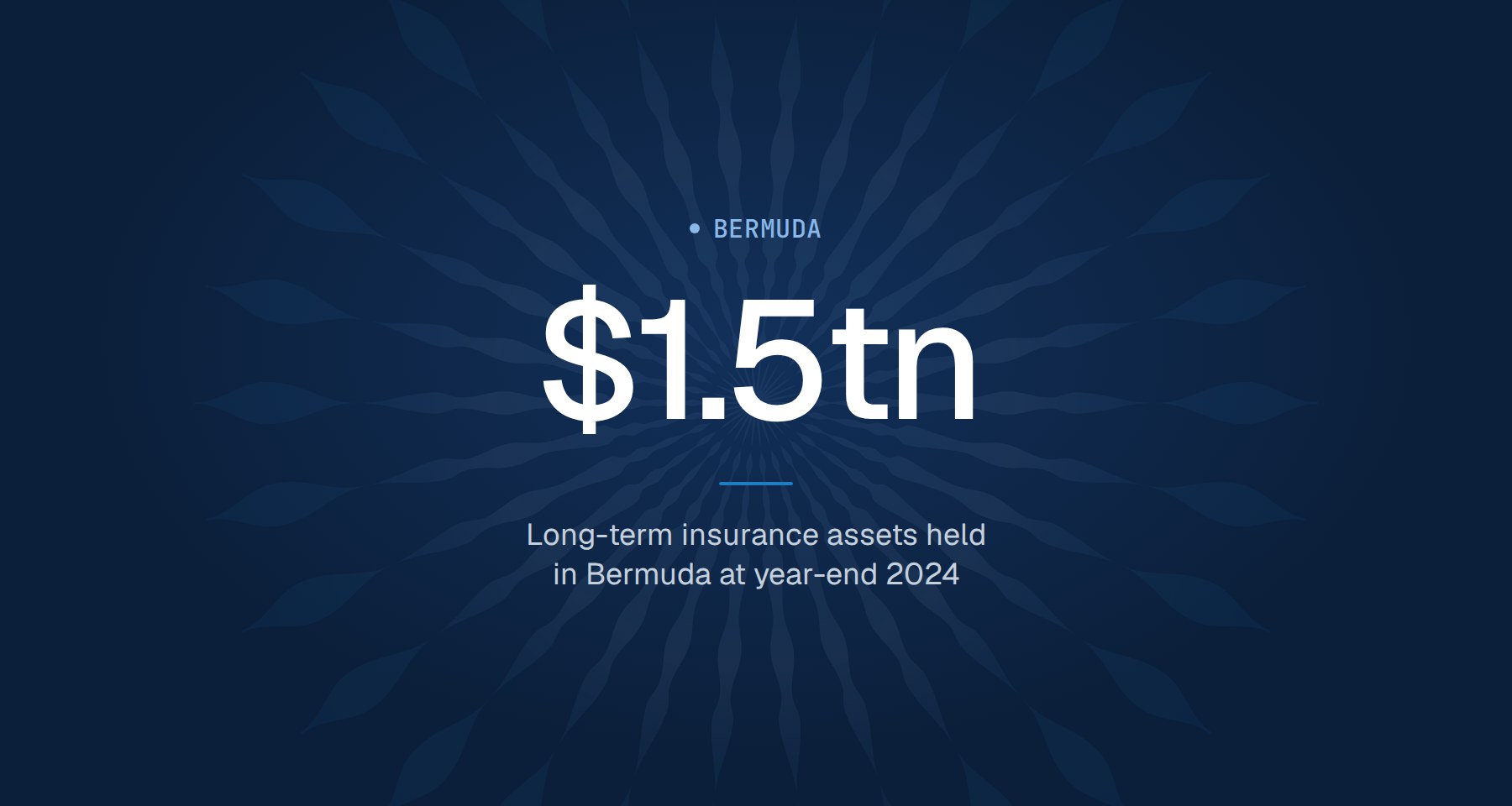
Bermuda's long-term insurers hold $1.5 trillion of assets. How the market is growing, how the rules are tightening, and which actuarial skills it needs.
Let's talk about the role you can't fill
Whether you are hiring an actuary or quietly weighing up your next move, the first conversation is confidential and costs nothing.