
The CTS Actuarial Brief, Issue 1: big blocks change hands as US regulators turn to recapture risk
Four life reinsurance deals, a Bermuda resolution consultation, and the NAIC's proposed capital charge on reinsurance outside reciprocal jurisdictions.

The past few weeks in two minutes
- Lincoln closes its GUL deal with Talcott. Lincoln Financial's $6.3 billion reinsurance transaction with Talcott Financial Group closed on 1 October. A Talcott subsidiary reinsures about $5.8 billion of in-force guaranteed universal life (GUL) statutory reserves. That is around 37% of Lincoln's remaining in-force GUL block. Together with its 2023 Fortitude Re deal, Lincoln has now reinsured about 60% of its total GUL block. Lincoln release via Business Wire
- Manulife's long-term care cession to Munich Re has closed. Manulife announced the closing on 1 October, with the reinsurance effective from 1 July 2026. Munich Re Life US takes the biometric risk on a long-term care block. The block carries C$3.2 billion of reserves (IFRS 17 basis, 80% quota share). In August Manulife described the pricing as a modest negative 5% cede, similar to its prior deals. Closing | August
- Prismic and Prudential agree another Japanese whole life deal. Prismic will reinsure about $5 billion of reserves backing USD-denominated Japanese whole life policies. The policies were originated by Prudential Financial's Japanese affiliates, and Prudential will keep administering them. Prismic says its deals with Prudential now cover more than $22 billion of USD-denominated liabilities. Reinsurance News, 5 October
- Pacific Life Re takes on US PRT longevity risk. It has a $3 billion longevity reinsurance agreement with American National Insurance Company. The deal covers the longevity risk on $3 billion of PRT liabilities. Pacific Life Re calls it the US market entry for its Savings & Retirement business. Reinsurance News, 6 October
- Bermuda consults on a resolution regime. A BMA consultation paper dated 15 September proposes a first phase. The BMA would be the resolution authority, with five resolution objectives. It would cover domestic insurers and BMA-designated internationally active insurance groups where the BMA is group-wide supervisor. The BMA could add others it judges critical to Bermuda. Its definition of commercial insurers includes long-term Classes C, D and E. Comments close on 15 December 2026. BMA
- Two actuaries step into top roles. Anthony Young became CEO of West Grove Re in September. He was most recently Chief Valuation Officer and Managing Actuary at RGA. West Grove Re is the Bermuda sidecar Talcott set up with Goldman Sachs in August (Reinsurance News). Laurence Frappier, FSA, FCIA, became OSFI's Chief Actuary on 1 October. The role leads the office that reports on the Canada Pension Plan (OSFI).
Worth knowing: US regulators move from testing to capital
Actuarial Guideline 55 (AG 55) applies to US cedants of certain asset-intensive business. They must analyse whether the assets backing that ceded business stay adequate under moderately adverse conditions. First reports were due on 1 April 2026 (Debevoise).
This summer the NAIC's Financial Condition (E) Committee sent a referral to the Life RBC (E) Working Group. It asked for two changes to the life RBC formula for year-end 2027. The first is a recapture factor on ceded reserves and modified coinsurance balances for reinsurance outside reciprocal jurisdictions, with allowance for overcollateralisation. The second is a recoverability charge based on reinsurers' ratings, in line with the P&C formula.
Bermuda is a reciprocal jurisdiction. As drafted, the recapture factor would fall mainly on cessions to other offshore domiciles. The ratings-based charge would reach all reinsurers. Debevoise reports on preliminary regulator reviews of AG 55 reporting. They found that deals with "unauthorised" reinsurers tend to cut total asset requirements more than comparable business ceded to Bermuda (Debevoise).
On 28 September the American Academy of Actuaries' Reinsurance Work Group commented. It called a 31 December 2027 effective date "aggressive" for a fully calibrated factor. It asked for a phase-in, for example over two to three years. It also suggested basing the charge on the asset shortfalls insurers already report under AG 55 (Academy).
The working group took those comments, and five others including the ACLI's, on 6 October. Its 13 October agenda (US time) asks what method the charge should use. The options listed are a factor, a non-allowance of RBC credit, or another method such as a stress or scenario-based calculation (NAIC). Draft year-end 2026 AG 55 templates and guidance were open for comment until 9 October (NAIC). The NAIC Fall National Meeting runs from 14 to 17 November in Dallas (NAIC). None of the RBC changes is final.
We will be back on 27 October. If this issue was useful, please pass it to a colleague. For a confidential conversation about your next move or your team's hiring, email jobs@concordiatalentsolutions.com.
About the author

Sho Temma is an Associate in Candidate Relations at Concordia Talent Solutions, a specialist actuarial and insurance recruitment firm. He works with actuaries across the US, Canada, Bermuda and Asia on their careers and next moves, and writes CTS Insights on actuarial pay, hiring and regulation.
More insights
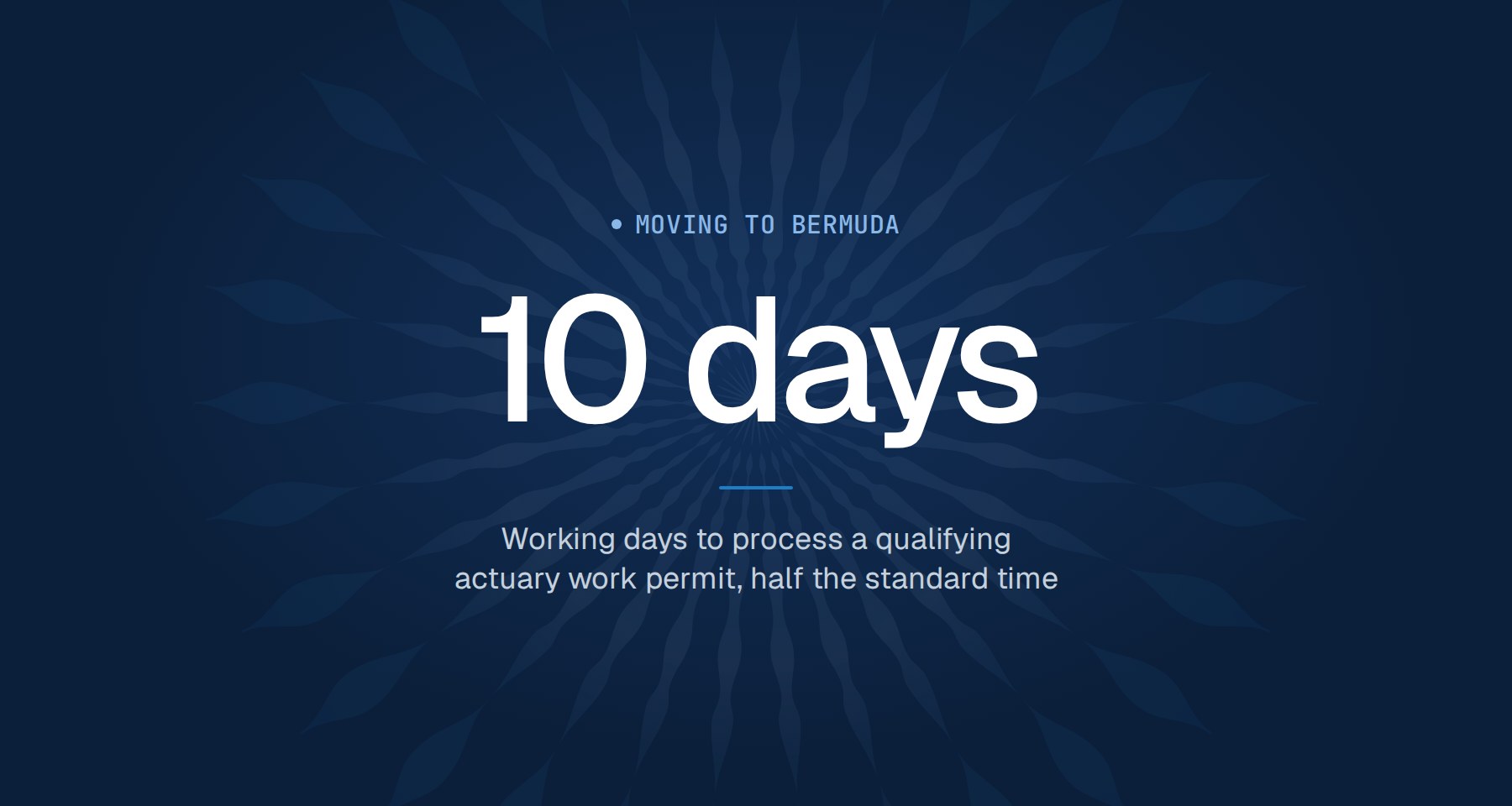
What a move to Bermuda involves for actuaries: the work permit fast track, payroll tax and deductions, rents and schools, and your US or Canadian tax.
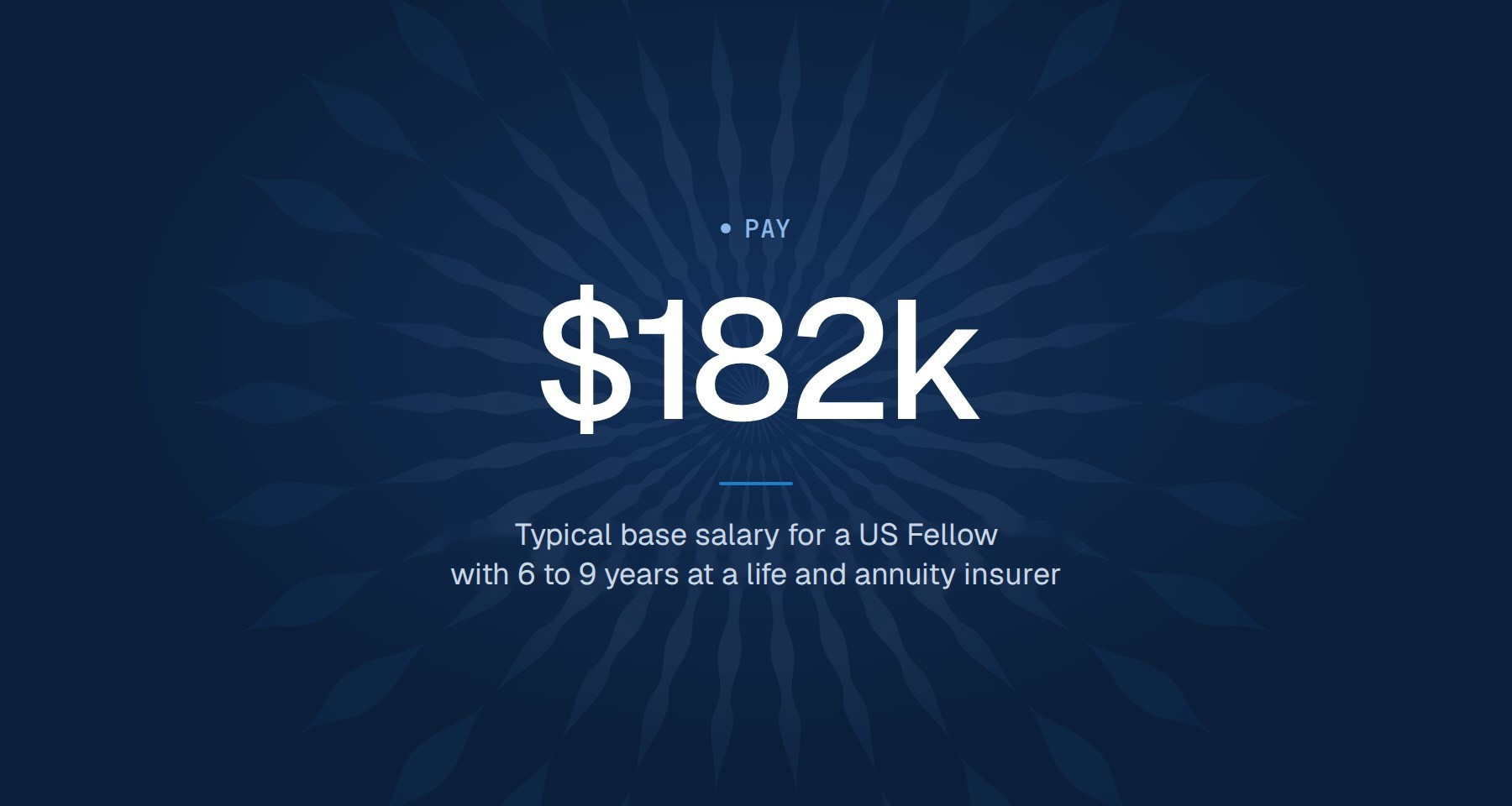
Typical base pay for US actuaries by credential, experience, sector and city, plus bonus targets and pay in Canada and Bermuda, from the CTS Pay Index.

Titles mean different things at insurers, reinsurers, consultancies and Big 4 firms. How the levels line up and what each pays in the US, Canada and Bermuda.

What actuaries ask for to move, how counteroffers tend to play out, where non-competes still apply, and the paperwork for moving to the US or Bermuda.
Let's talk about the role you can't fill
Whether you are hiring an actuary or quietly weighing up your next move, the first conversation is confidential and costs nothing.